

The Underground Mycelium: When Transformation Requires Invisibility
And our thoughts on navigating the delicate balance between quiet influence and public advocacy


Systems Design Lab helps social sector organizations use systems thinking and human-centered design to collaborate, innovate, and amplify their community impact. We work with technical tools, but we focus most on people. We are really good at bringing together diverse perspectives to make radical changes that lead to radical social change.
TL;DR // Organizational transformation often requires a delicate dance between subversive influence and explicit advocacy. Our research into mid-level leaders reveals that the most consequential changes frequently occur in the spaces we haven't explicitly designed for: through invisible networks that create visible impact. Understanding when to work underground versus when to surface publicly isn't just strategic; it's essential for sustainable systemic transformation.
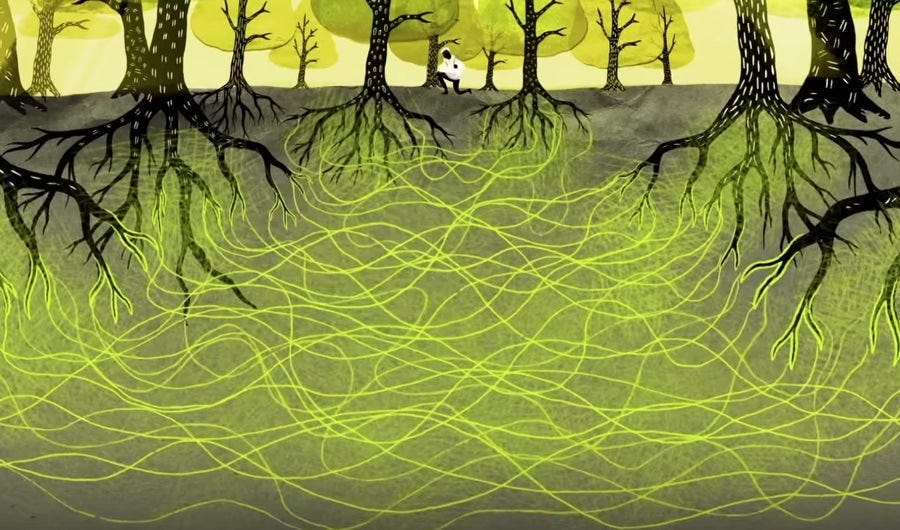
A couple of years into my research on networked improvement leadership, one participant offered a metaphor that has stayed with me ever since. She described herself as "the mycelium of improvement work in our system," the invisible fungal network that spreads nutrients and connections beneath the forest floor, making possible the mushrooms that eventually surface.
"I'm building this dense web of connections," she explained, "spreading continuous improvement through relational work across organizational boundaries. But the moment I name what I'm doing, the moment it becomes visible as 'change management' or 'improvement work,' it gets politicized. It becomes vulnerable."
Her words illuminate a profound tension at the heart of organizational transformation: Does naming our change work kill it? When does visibility become vulnerability? And perhaps most importantly, how do we navigate the space between influence and advocacy, between working underground and surfacing publicly?
Last week, we discussed research we conducted on the role of mid-level leaders in serving as bridge-builders across complex systems. This week, we delve deeper into this research and offer a remix focused on one of the dimensions of leaders’ work: navigating the tension between hidden and explicit change. It's the dilemma facing anyone trying to shift entrenched systems from within: the delicate calculus of when to plant seeds quietly and when to harvest them publicly.
Reading the Environmental Landscape
Before we can understand the strategic choices available to change agents, we need to map the terrain they're navigating. Drawing from the Cynefin framework for sensemaking, the context in which transformation occurs fundamentally shapes which approaches become viable.
In chaotic organizational environments (those marked by political turbulence, leadership transitions, or crisis), explicit change initiatives often become lightning rods for resistance. The very act of naming improvement work can trigger defensive responses from those who interpret change as criticism of current practice. One participant described this as working in "a system where any mention of 'change' got weaponized in internal politics."
In complex but stable environments, there's more room for explicit advocacy, for building coalitions around shared language and visible goals. Yet even here, the most effective change agents we have studied moved fluidly between subversive and explicit approaches, sensing and reading the organizational culture, and then adapting their strategy accordingly.
What emerges from this environmental analysis is a both/and framework: sustainable transformation often requires both underground networks and above-ground advocacy, as well as both invisible influence and visible leadership. The art lies in discerning which approach fits which moment.
The Case for Working Underground
The leaders in my research who described themselves as "stealth" operators weren't avoiding accountability or shirking transparency. They were protecting something precious: the relationships and trust that make transformation possible in the first place.
Conducting Covert Improvement
"I embed PDSA [Plan-Do-Study-Act] cycles into everything I do," one participant explained, "but I never call them that. I just ask good questions, gather data, test small changes, and reflect with people on what we're learning. The moment I start using improvement language, people's guards go up."
This practice, which she called "conducting covert improvement," represents a sophisticated understanding of how change actually spreads within organizational systems. Rather than imposing methodologies, these leaders embed continuous improvement thinking into the natural rhythm of collaborative work. They serve as what another participant called "translators,” helping colleagues engage in reflective practice without triggering the resistance that formal change initiatives often provoke.
Building Trust Through Proximity
The most effective subversive change agents don't position themselves as external experts bringing solutions. Instead, they work alongside colleagues to solve shared problems together. This proximity fosters what organizational psychologists call "swift trust," a type of relational foundation that enables people to take risks and engage deeply in collaborative work.
One participant described her role as "creating buffer zones" around transformative work. When political pressures threatened to derail a collaborative initiative, she would absorb the turbulence, translating between competing interests and protecting the delicate work of relationship-building that makes systemic change possible.
The Network Effect
Perhaps most powerfully, subversive change agents understand that transformation spreads through networks, not hierarchies. The mycelium metaphor captures this perfectly: underground networks create the conditions for visible breakthroughs. A single visible mushroom is supported by a vast invisible infrastructure.
"I'm not trying to change the whole system at once," reflected one leader. "I'm helping people discover their interdependence, one relationship at a time. Eventually, those relationships become the substrate for bigger changes."
The Emotional Infrastructure of Quiet Work
Yet working underground comes with profound costs that we must acknowledge. The leaders in my research consistently described experiences of isolation, of carrying the vision for transformation largely alone. One participant called it "the tax of invisibility," or the personal toll of holding hope for systemic change while rarely receiving recognition or support for that work.
This isolation isn't just personally challenging; it's systemically dangerous. When transformation work remains invisible, it becomes vulnerable during leadership transitions. New executives may not understand or value work they can't see, leading to the dismantling of carefully cultivated networks and relationships.
"I've watched years of careful relationship-building get undone in a single reorganization," one participant shared, "because the new leadership couldn't see the infrastructure we'd created."
The emotional labor of this work extends beyond professional isolation. These leaders engage in what we have come to understand as internal negotiations: constant efforts to reconcile competing demands, multiple identities, and the tension between personal values and organizational realities. They're simultaneously building trust with colleagues while managing their own disillusionment with systems that resist change.
A leader once told me that improving complex systems requires living on the boundary between belief and doubt. It’s true; making peace with this messy work requires what seems like many contradictory capacities: holding hope while accepting disappointment, investing deeply while maintaining boundaries, building relationships while protecting oneself from organizational harm.
The Case for Explicit Advocacy
Despite the costs and risks, there are moments when transformation must surface, when quiet influence gives way to public advocacy. The challenge lies in discerning when underground work has created a sufficient foundation for above-ground action.
Creating Shared Language and Infrastructure
Invisible work, by definition, can't be taught, scaled, or systematically supported. At some point, transformation requires institutionalization: the creation of structures, roles, and practices that can endure beyond the efforts of individual champions.
"We reached a tipping point," one participant explained, "where enough people were doing improvement work informally that we needed to create formal supports. We needed shared language, dedicated time, and explicit permission to do what we'd been doing quietly all along."
This shift from subversive to explicit isn't abandonment of underground work; it's recognition that informal networks need formal scaffolding to become sustainable.
Building Coalitions for Collective Action
Perhaps more importantly, explicit advocacy enables collective action. While individual change agents can plant seeds and build relationships, systemic transformation requires coordinated effort across multiple levels and functions within an organization.
The mycelium network, for all its power, eventually needs to produce visible mushrooms. Those mushrooms, in turn, create conditions for the network to spread further. Explicit advocacy serves this mushroom function: making transformation visible, legitimate, and available for others to join.
Enabling Learning and Adaptation
Finally, explicit approaches enable the kind of systematic learning that underground work, by its nature, cannot. When we can name our change strategies, measure their impact, and reflect collectively on what we're learning, we create feedback loops that strengthen our capacity for transformation over time.
Decision-making research emphasizes that good choices emerge from clear processes: articulating values, exploring possibilities, engaging diverse perspectives, and tracking outcomes. These practices require the kind of transparency and shared language that underground work necessarily avoids.
A Framework for Adaptive Strategy
The leaders who navigate this tension most skillfully don't choose between subversive and explicit approaches. Instead, they develop an adaptive change strategy that allows them to move fluidly between underground and above-ground work, based on organizational readiness, environmental conditions, and strategic timing.
This adaptive capacity draws on four practices that help navigate complexity:
Orient: Understanding the current landscape and constraints. This includes reading political dynamics, assessing leadership stability, and identifying cultural factors that influence receptivity to change.
Attune: Developing sensitivity to organizational culture and relational dynamics. The most effective change agents I studied possessed remarkable emotional intelligence, able to sense when direct advocacy would trigger resistance and when underground work had created a sufficient foundation for public action.
Pause: Creating space for reflection and strategic choice. In chaotic environments, the pressure to act immediately can overwhelm more thoughtful approaches. Effective change agents incorporate rhythms of reflection into their work, regularly assessing whether their current strategy aligns with the broader goal of transformation.
Prototype: Testing approaches and learning from results. Rather than committing to a single strategy, adaptive leaders experiment with different combinations of subversive and explicit work, tracking what works in their specific context and adjusting accordingly.
This isn't a prescription for when to work underground versus when to surface publicly; rather, it's recognition that effective change agents operate more like jazz musicians than classical performers: they improvise within structure, read their environment, and adapt their approach in real-time. They understand that their individual work exists within a larger ecosystem of transformation, where invisible networks and visible advocacy play complementary roles.
Implications for Organizational Design
Understanding this dynamic has profound implications for how we design roles, structures, and support systems within organizations committed to transformation.
For senior leaders, this research suggests the need to recognize and protect the "space between the boxes" where informal relationship work happens. This might involve explicitly designing boundary-spanning roles, creating buffer zones during times of organizational turbulence, and developing metrics that capture both relational and network-building work alongside traditional outputs.
For mid-level leaders navigating this terrain, these findings offer permission to move strategically between visibility and invisibility, recognizing both as legitimate and necessary forms of leadership. It also emphasizes the importance of finding trusted colleagues who can provide support and offer a different perspective during the inevitable moments of isolation and doubt.
For organizations themselves, this work points toward the need for healing to address the embedded trauma that manifests as fractured relationships, defensive postures, and resistance to change. Before systems can transform, they often need to heal from the harm created by previous change initiatives that ignored relationships and imposed solutions without building understanding.
The Courage of Strategic Invisibility
As I write this, I'm struck by how counterintuitive this framework feels in a broader culture that valorizes visible leadership, measurable outcomes, and individual achievement. The notion that some of our most important work might need to remain invisible challenges dominant narratives of “success” and about how change happens.
Yet, the leaders in my research consistently demonstrated that transformation requires a different kind of courage: the courage to work without recognition, to build without credit, to influence without authority. It requires the wisdom to know when to speak and when to remain silent, when to push and when to yield, when to surface and when to stay underground.
"Sometimes the most radical thing you can do," one participant observed, "is to show up with consistency and care, day after day, building trust one relationship at a time. It doesn't look like much from the outside, but it's the foundation everything else is built on."
This is the art of strategic invisibility: understanding that some work must remain hidden not because it's shameful or manipulative, but because it's too important to expose to the destructive forces of organizational politics and resistance to change.
In our current moment, characterized by unprecedented complexity, rapid change, and deep polarization, this both/and approach to transformation feels more essential than ever. We need leaders who can work in the spaces between the boxes, who can build networks that span traditional boundaries, and who can move strategically between visibility and invisibility in service of lasting change.
After all, the most resilient forests aren't just those with the tallest trees. They're those with the richest, most interconnected root systems; the invisible networks that create conditions for the entire ecosystem to thrive.
If your team is navigating the tension between influence and advocacy, between underground relationship-building and explicit change management, we'd love to explore how these insights might inform your approach. The work of transformation requires both the patience of the mycelium and the courage of the mushroom…and knowing when to be which.

» Our team recently presented about collective action to a group of public health leaders here in the Upper Valley in New Hampshire/Vermont. We had the opportunity to share some of the awesome work at Jackson County (MO) Public Health, as well as our thoughts on trust-based collaboration. Check out the video or slides.
» This week, I visited a sculpture park in the Catskills. Among many beautiful, massive modern artworks, my daughter chose to sit and stare closely at a single bee on a tiny flower for 10 minutes. It reminded me of the power of seeing things for the first time and just how beautiful wonder is. This prompt from The Isolation Journals with Suleika Jaouad is a testament to that.
» I don’t know about you, but despite taking a break in July, my nervous system is still quickly getting into fight/flight/freeze mode. I think it’s the sociopolitical context and the degree of uncertainty we’re experiencing, and I’m trying to flow with it. Practicing body scan meditation seems to be helping.
Find us elsewhere: